Research

Learning Analytics

Content-Grounded Interpretation of Learning Behaviors

Content-Grounded Interpretation of Learning Behaviors

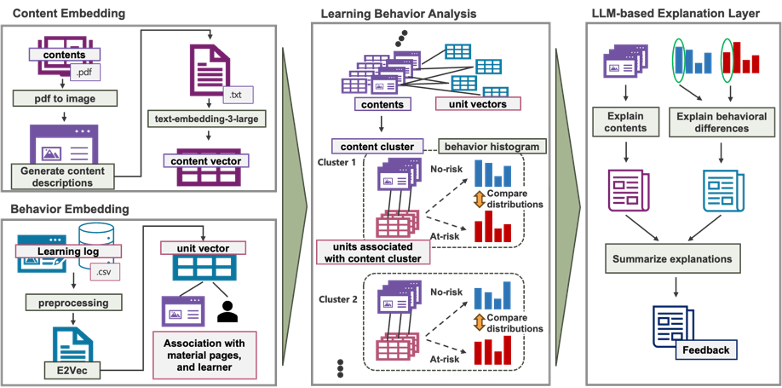
We study methods for making fine-grained learning behavior analysis more interpretable by grounding behavioral differences in the instructional content where they occur. Instructional pages are organized into semantically coherent contexts and linked to independently analyzed learning behaviors, while LLMs are used only as an explanation layer to generate understandable and trustworthy feedback without altering the underlying analytical evidence.
Adaptive Learning Support through Knowledge Monitoring

Adaptive Learning Support through Knowledge Monitoring

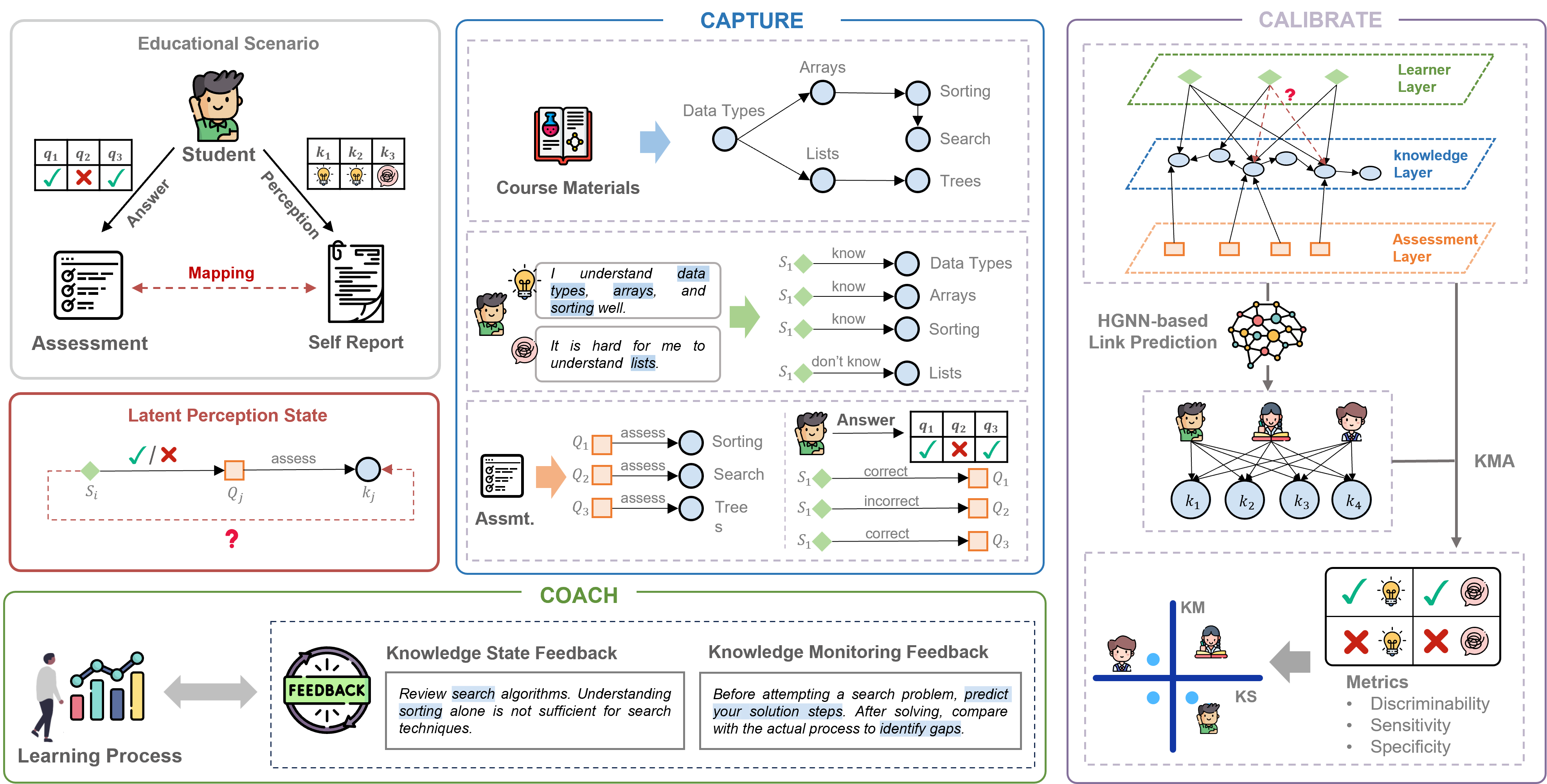
We study adaptive learning support that considers not only what learners actually know but also how accurately they perceive their own understanding. By integrating open-ended learning reflections and assessment results using LLMs and heterogeneous graph neural networks, we estimate learners' perceived knowledge states and provide personalized feedback that addresses both knowledge gaps and metacognitive miscalibration such as overconfidence and underconfidence.

Learning Analytics for Agricultural Training

Learning Analytics for Agricultural Training

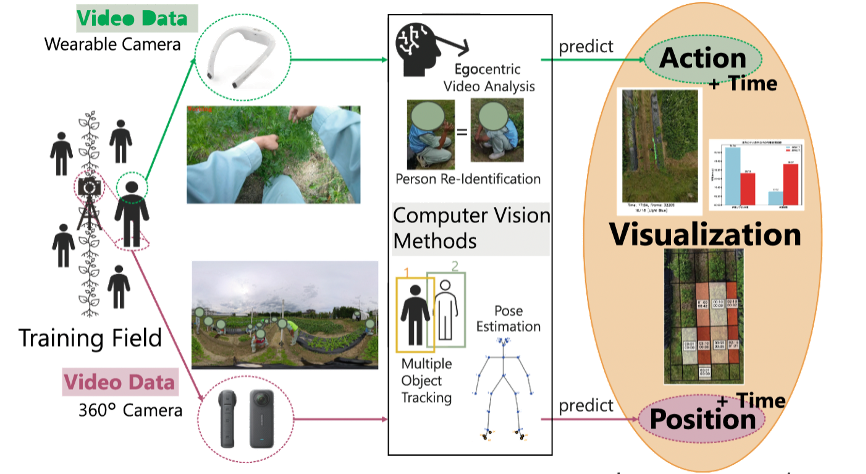
We study learning analytics for agricultural training to support objective understanding of learners' activities and improve teaching reflection. Using 360-degree and wearable cameras, we estimate and visualize learners' positions, work duration, and activity states, providing evidence that complements teachers' observations and supports reflection, assessment, and instructional improvement in practical agricultural education.

Curriculum-Level Learning Analytics

Curriculum-Level Learning Analytics

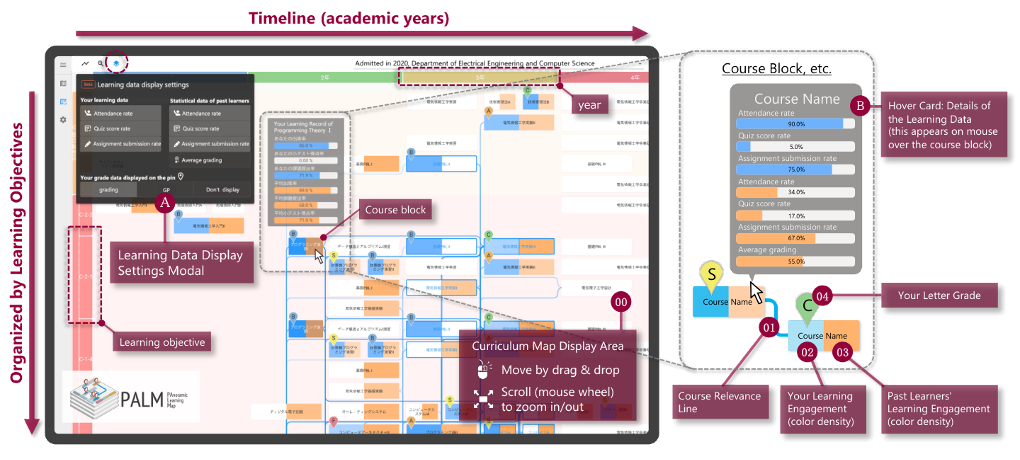
We study learning analytics that supports learners beyond individual courses by providing a curriculum-wide view of their learning progress and connections across courses. By integrating course relationships, individual engagement, historical learner trends, and academic outcomes as multiple layers on a curriculum map, we aim to support long-term planning, reflection, and self-regulated learning across the curriculum.

Enhancing Educational Chatbots with RAG

Enhancing Educational Chatbots with RAG

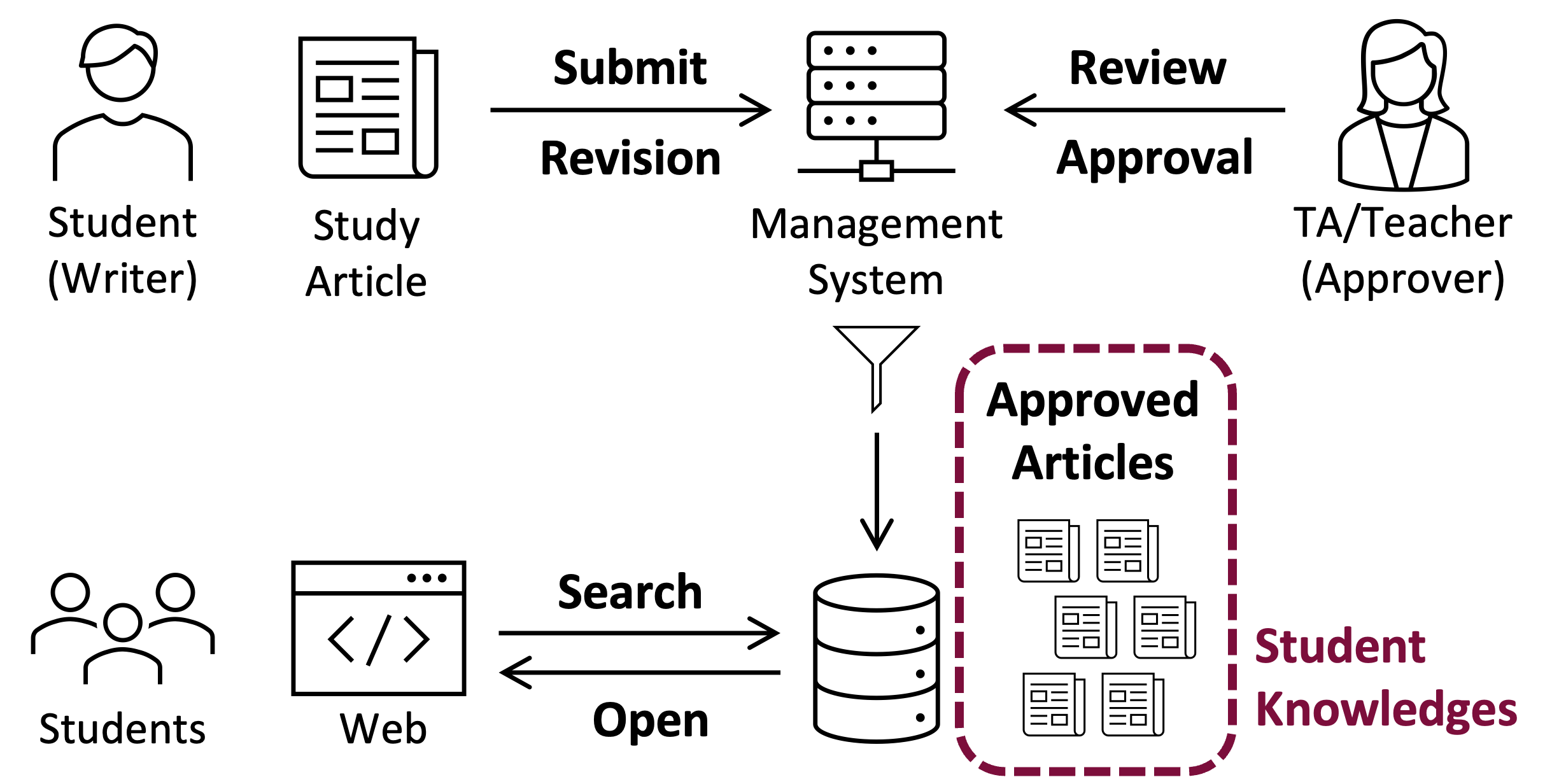
We study RAG-based educational chatbots that improve the accuracy and contextual relevance of generative AI responses. By combining structured knowledge from lecture materials with diverse perspectives and learning experiences captured in student-contributed study articles, we aim to provide reliable, course-aligned, and flexible support for student learning.

Knowledge Structure Analysis from Learner Reflections

Knowledge Structure Analysis from Learner Reflections

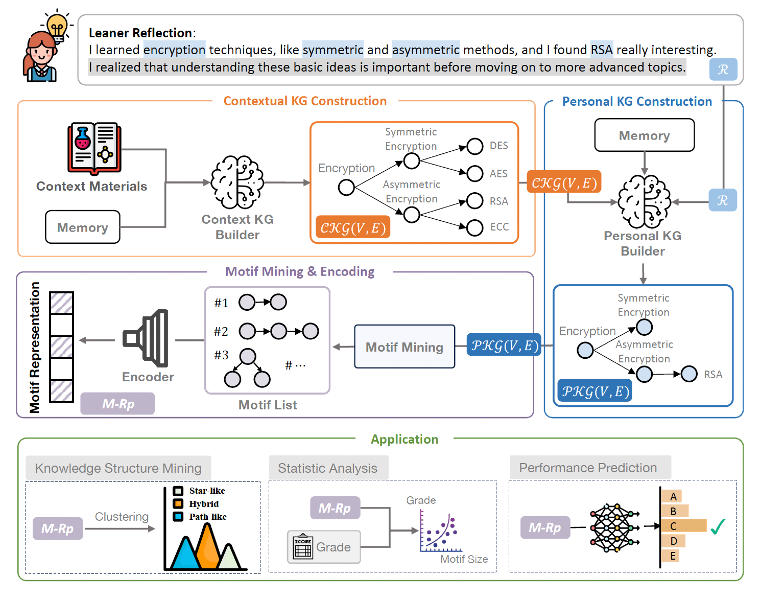
We study methods for understanding how learners construct and connect knowledge through their written reflections. Using LLMs, reflections are transformed into personal knowledge graphs, from which recurring substructures called motifs are extracted to represent patterns of knowledge construction. These structural patterns are analyzed in relation to learning outcomes and can also be used for tasks such as grade prediction and early identification of at-risk students.

Early Prediction of At-Risk Students with Federated Learning

Early Prediction of At-Risk Students with Federated Learning

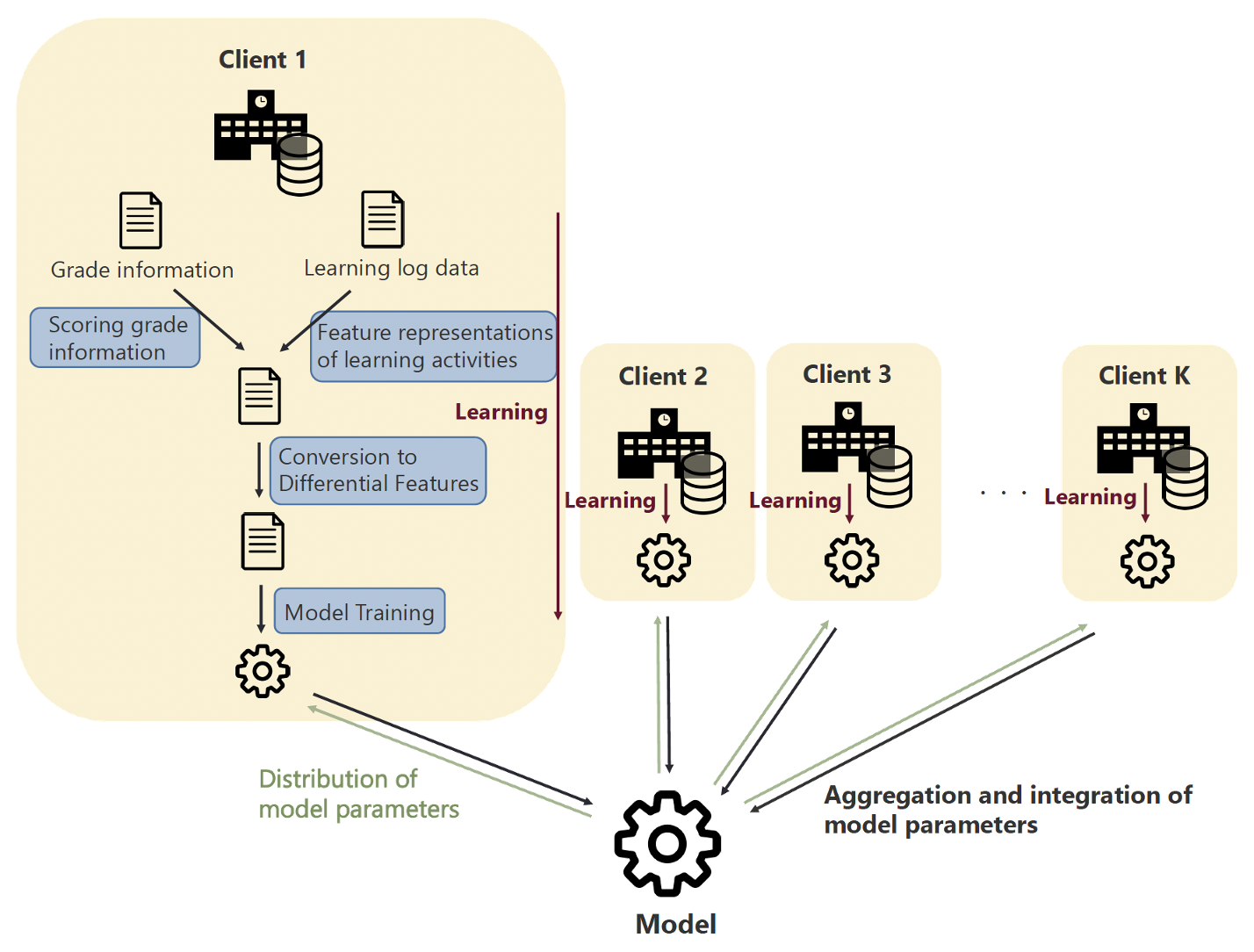
We study methods for predicting students at risk of academic difficulty by combining federated learning with differential features that capture relative differences among learners. The goal is to generate risk rankings that support early intervention while preserving privacy across educational institutions.

Collaborative Problem-Solving Skill Recognition

Collaborative Problem-Solving Skill Recognition

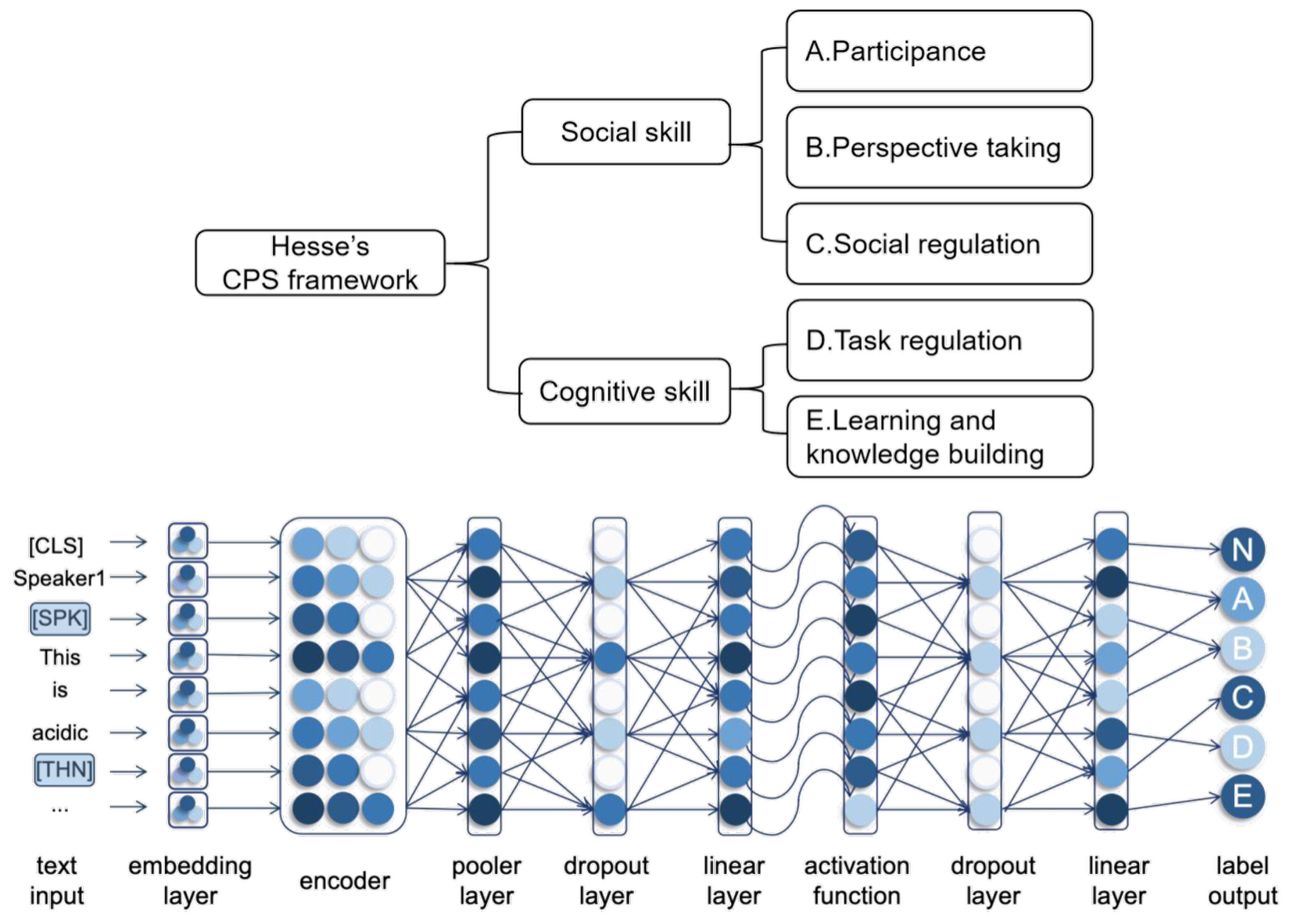
We study methods for automatically recognizing multiple collaborative problem-solving skills from classroom discussion data. By incorporating dialogue structure, such as speaker roles and turn-taking, the approach aims to support the analysis and assessment of collaborative learning.

Temporal Embedding of Learning Behaviors

Temporal Embedding of Learning Behaviors

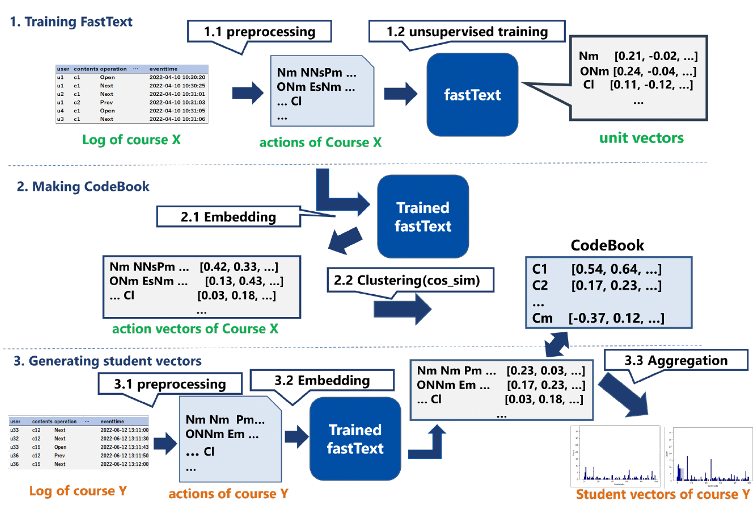
We study representation methods that capture both the sequence and timing of learner interactions with digital learning materials. E2Vec represents operations such as page navigation and annotation together with the time intervals between them, and transforms these temporal action sequences into distributed vector representations. These fine-grained learning behavior features can be applied to downstream learning analytics tasks such as at-risk student prediction.

Time Series Forecasting

Time Series Forecasting with Koopman Separation and Multilevel Attention

Time Series Forecasting with Koopman Separation and Multilevel Attention

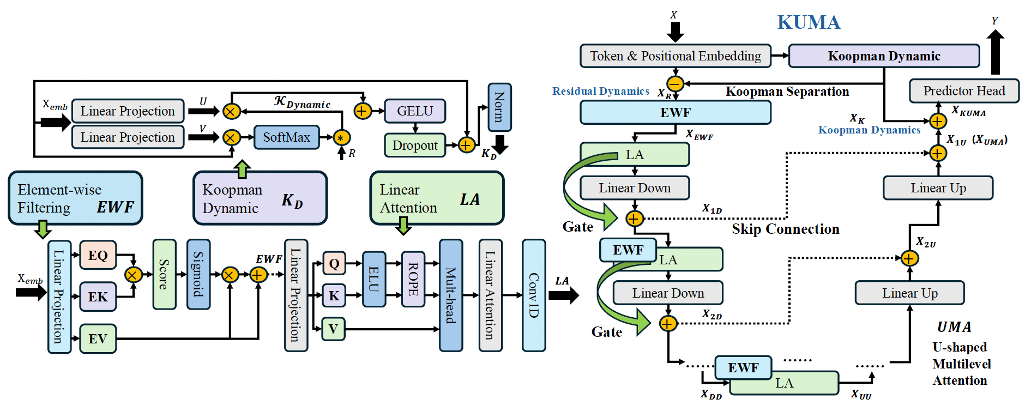
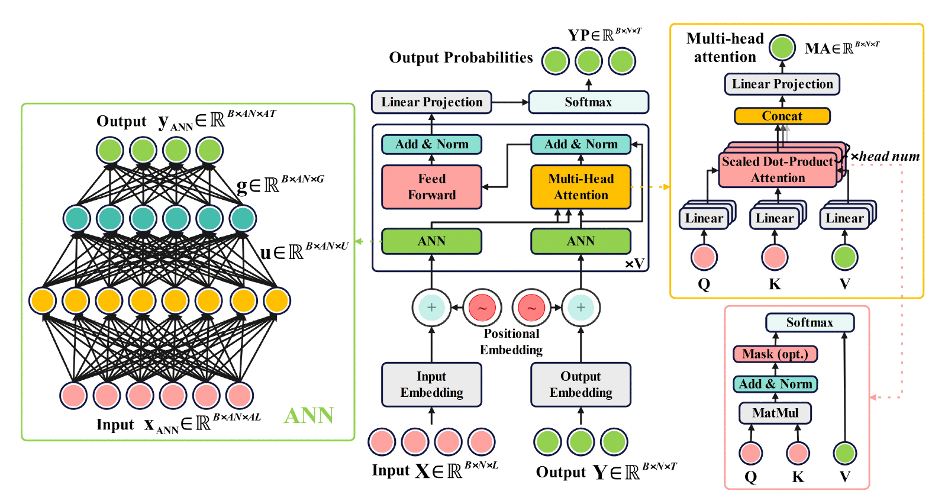
We study efficient and accurate time series forecasting methods that separate dominant dynamics from local and abrupt variations in non-stationary data. KUMA uses an input-dependent Koopman module to decompose time series into Koopman and residual dynamics, while a U-shaped multilevel attention architecture models the residual components. This design aims to handle temporal distribution shifts while balancing computational efficiency, token redundancy, and token scarcity.

Time-Series Forecasting with Mamba

Time-Series Forecasting with Mamba

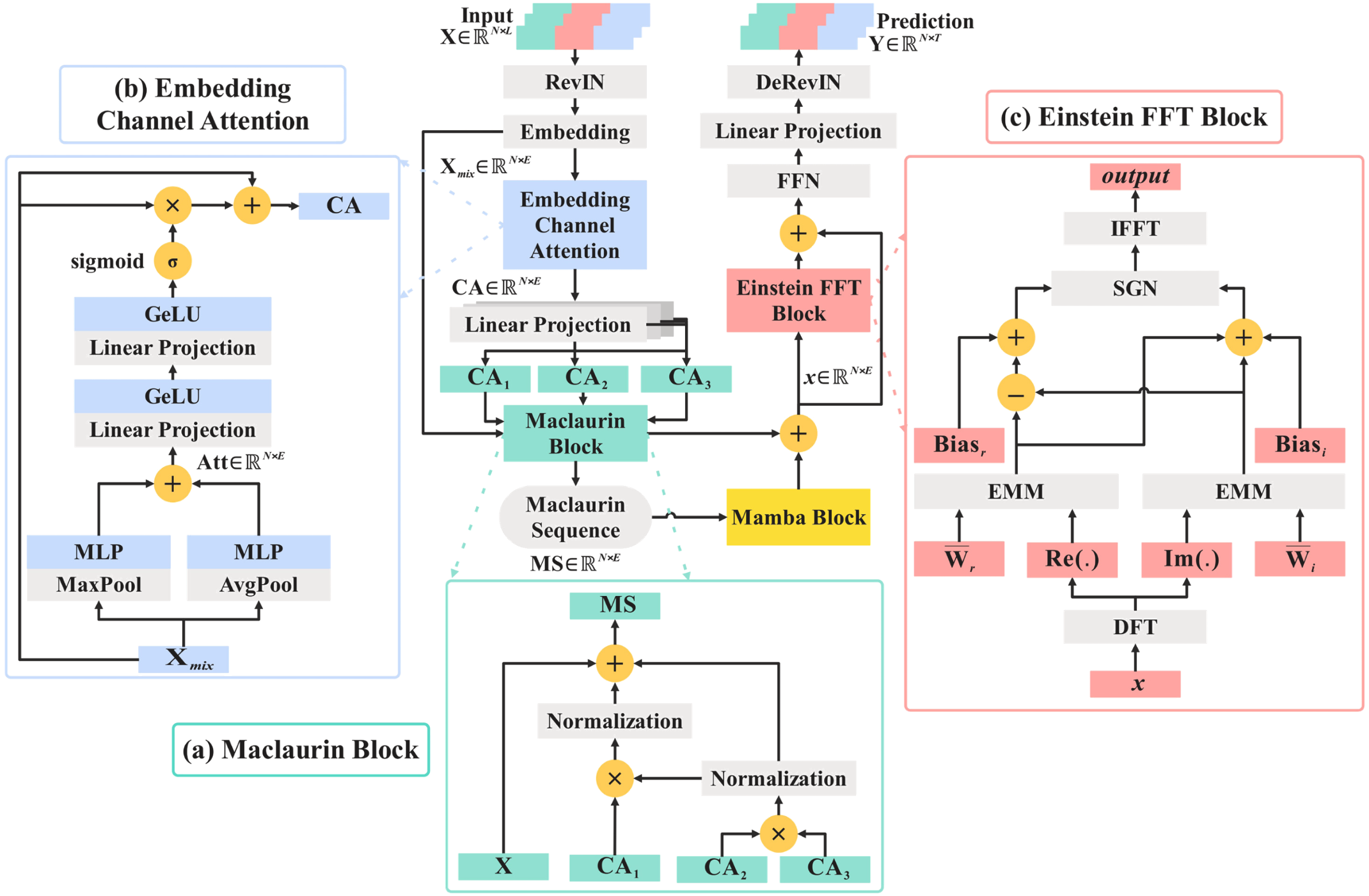
We study extensions of Mamba for modeling complex nonlinear dependencies in time-series data. By introducing a negative-feedback mechanism, the approach aims to better capture long-term dependencies and nonlinear temporal dynamics for accurate forecasting.

Continuous Glucose Forecasting

Continuous Glucose Forecasting

We study deep learning models for accurate forecasting of future states from time-series data. GluTANN introduces a dedicated attention mechanism into a Transformer-based architecture to improve continuous glucose forecasting while reducing predictive uncertainty.

AI for Human Support

Expert-Grounded Infant Sleep Log Analysis and Explainable Feedback Generation

Expert-Grounded Infant Sleep Log Analysis and Explainable Feedback Generation

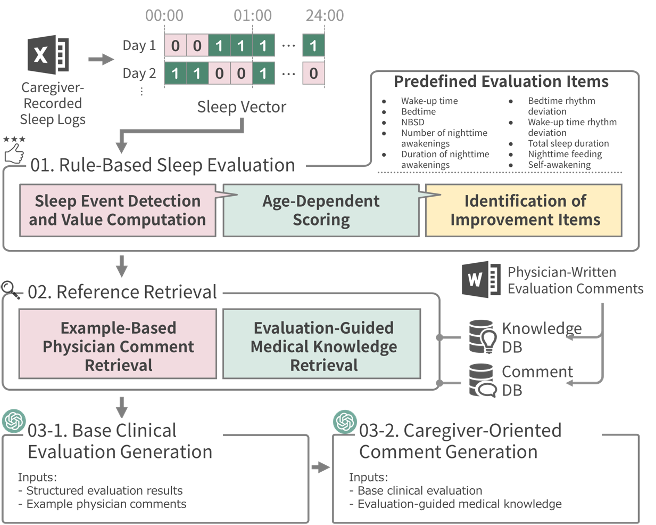
We study methods for automatically generating understandable and traceable feedback from infant sleep logs for caregivers. The framework evaluates sleep patterns using explicit age-dependent rules, retrieves relevant physician-written examples and expert knowledge, and uses an LLM only as an explanation layer. By separating assessment from language generation, we aim to provide safe, consistent, interpretable, and practically useful feedback for everyday caregiving support.

AI Support for Foreign Guardians Navigating Japanese School Culture

AI Support for Foreign Guardians Navigating Japanese School Culture

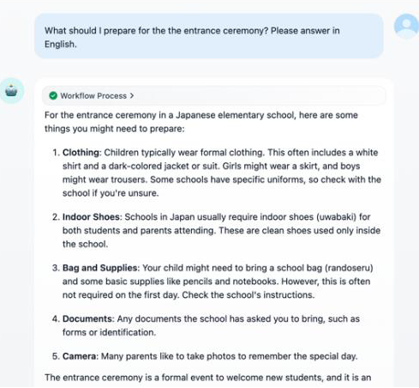
We study PAPAMAMA-TOMO, a generative AI-based conversational support system designed to help foreign guardians understand Japanese elementary school culture. Rather than simply translating school documents, the system allows guardians to ask natural-language questions and receive multilingual explanations about school events, required items, implicit cultural norms, and behavioral expectations. The goal is to reduce linguistic and cultural barriers and support more confident participation in children's school life.

Movement Recommendation Based on Congestion Analytics

Movement Recommendation Based on Congestion Analytics

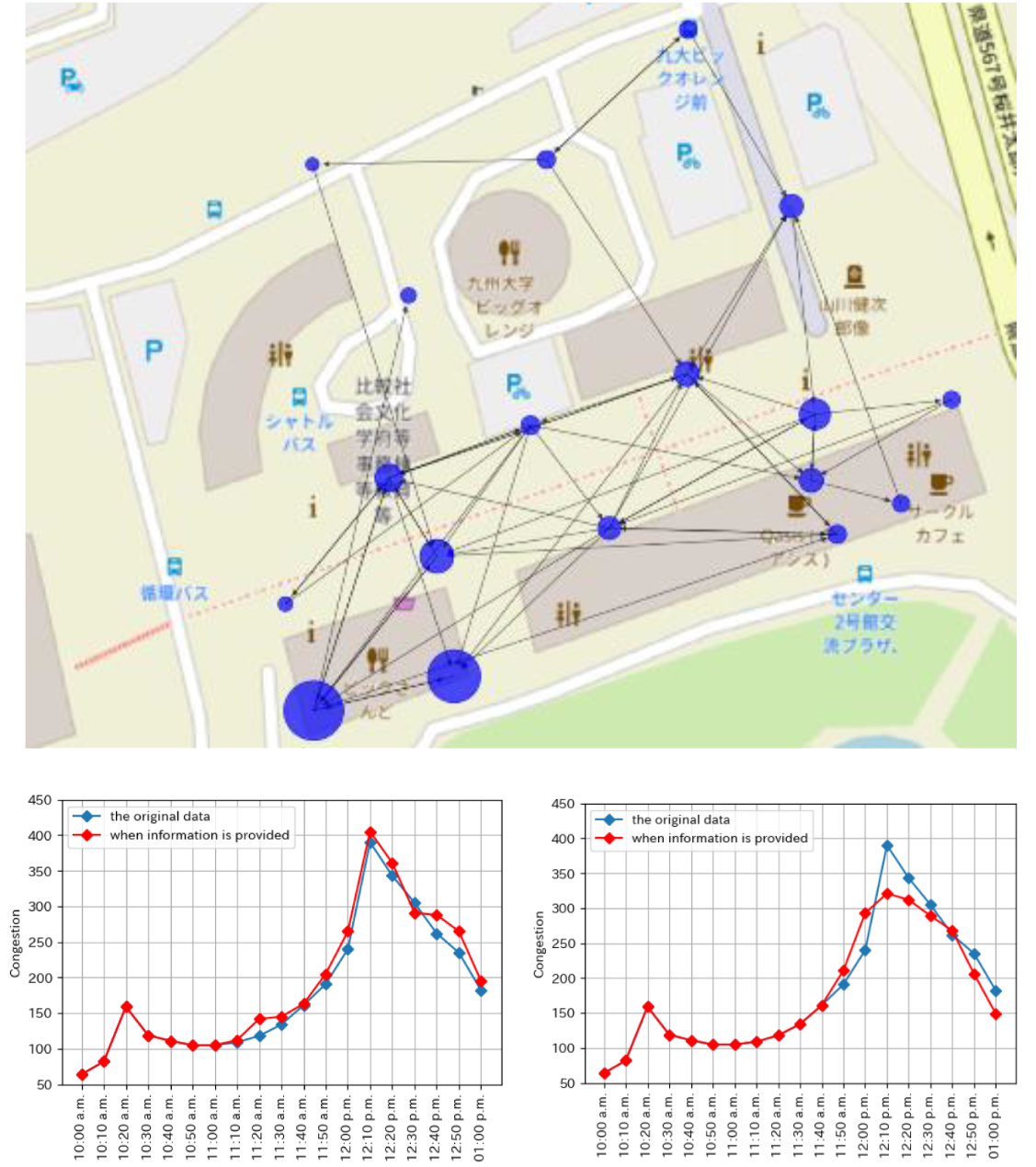
We study methods for supporting human mobility and mitigating congestion by recommending appropriate destinations and movement timing based on multi-location congestion analytics. The approach models congestion transitions from real-world human-flow data, considers movement behavior obtained from questionnaire surveys, and determines when and where information should be provided to encourage behavior changes and reduce congestion at important locations.

Wi-Fi-Based Congestion Analysis for Human Activity Support

Wi-Fi-Based Congestion Analysis for Human Activity Support

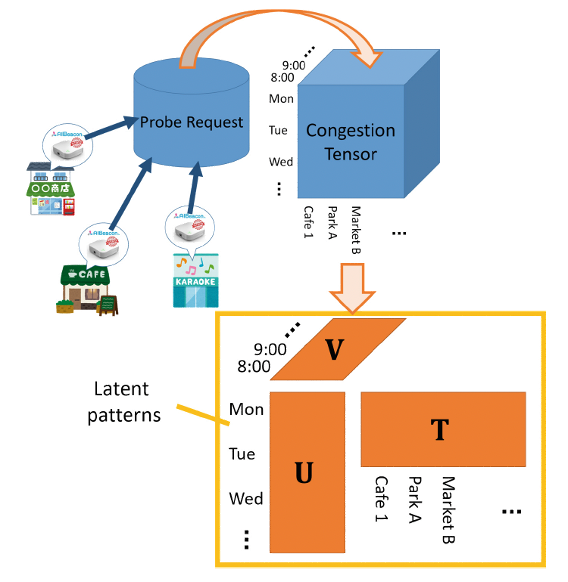
We study methods for analyzing congestion from Wi-Fi signals to support people's decisions and activities in shared spaces. The approach compares quantitative congestion estimated from the number of detected mobile devices with perceptual congestion reported by users, and applies non-negative tensor factorization to multi-location, day, and time data to reveal interpretable congestion patterns and relationships across locations.

Image Processing

Efficient Object Tracking with Specialized Knowledge Distillation

Efficient Object Tracking with Specialized Knowledge Distillation

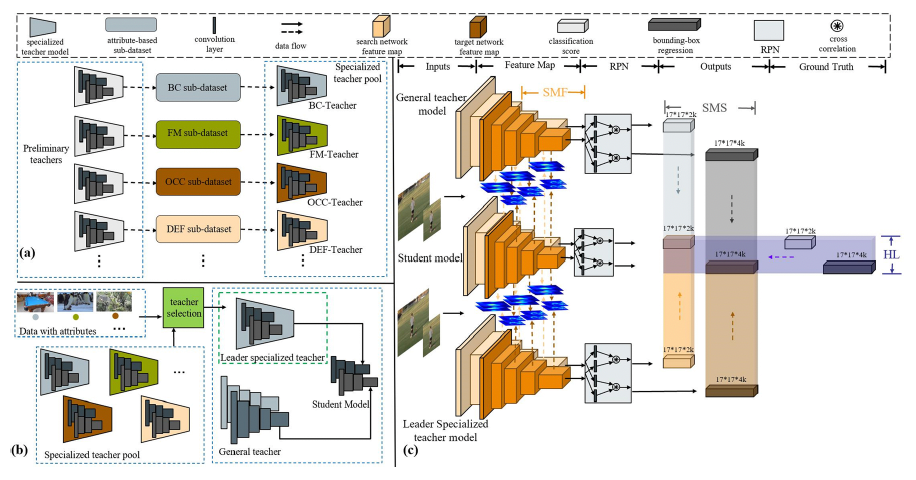
We study efficient visual object tracking through specialized multi-teacher knowledge distillation. In addition to a general teacher that provides basic tracking knowledge, specialized teachers are trained for challenging conditions such as occlusion, fast motion, and low resolution. By transferring both general and attribute-specific knowledge to a lightweight student tracker, the approach aims to achieve fast and compact tracking while maintaining strong performance in complex real-world scenarios.

Parameter-Efficient Adaptation of Vision Transformer for Change Detection

Parameter-Efficient Adaptation of Vision Transformer for Change Detection

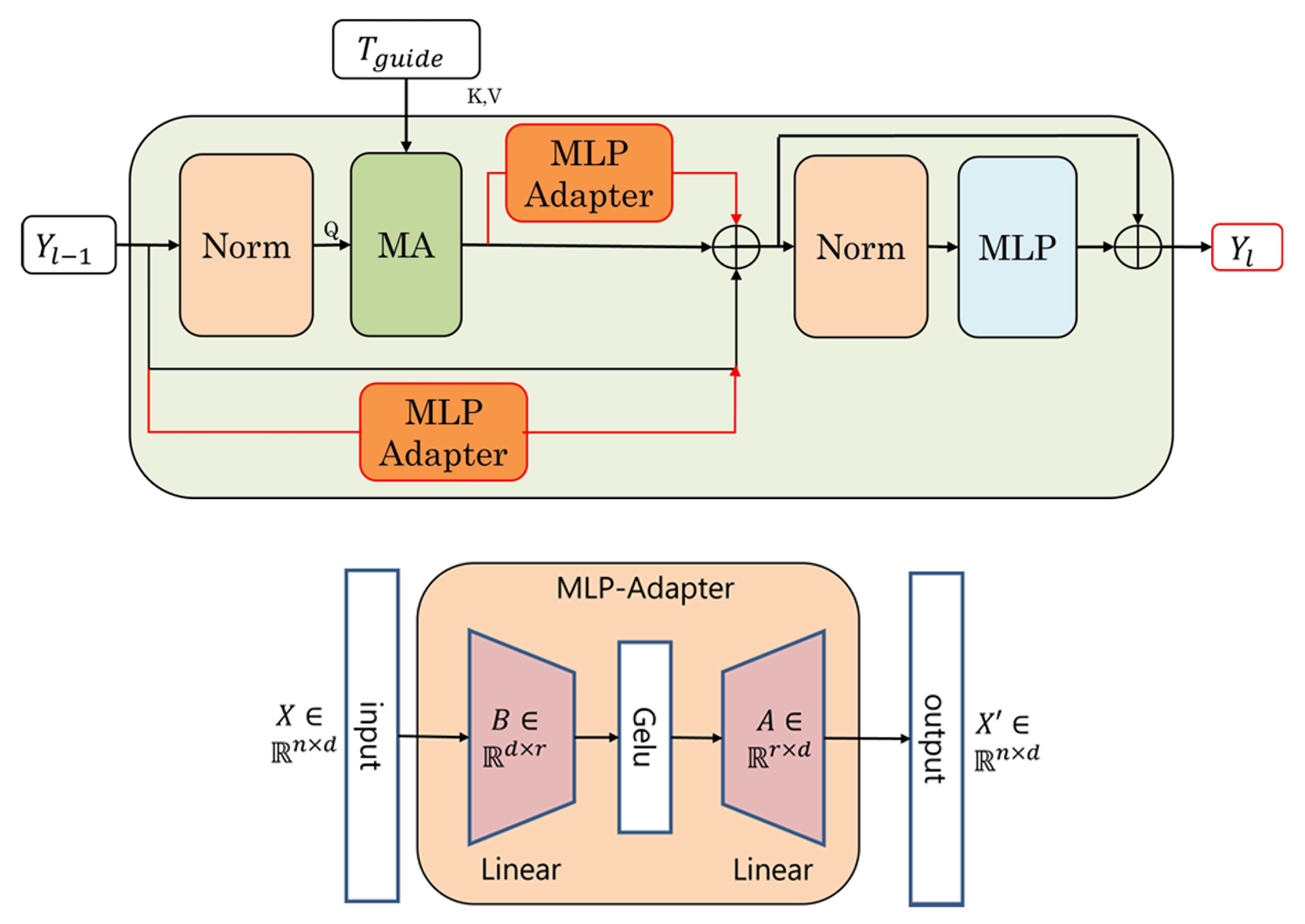
We study parameter-efficient adaptation of Vision Transformer-based change detection models to unseen scenes and background variations. The approach introduces MLP adapters into attention outputs and residual connections and applies LoRA to attention weights, allowing only a small number of additional parameters to be retrained while keeping most of the pretrained model fixed. This enables improved change detection in new environments with substantially lower retraining cost.

Analysis and Understanding of Deep Learning-Based Background Subtraction

Analysis and Understanding of Deep Learning-Based Background Subtraction

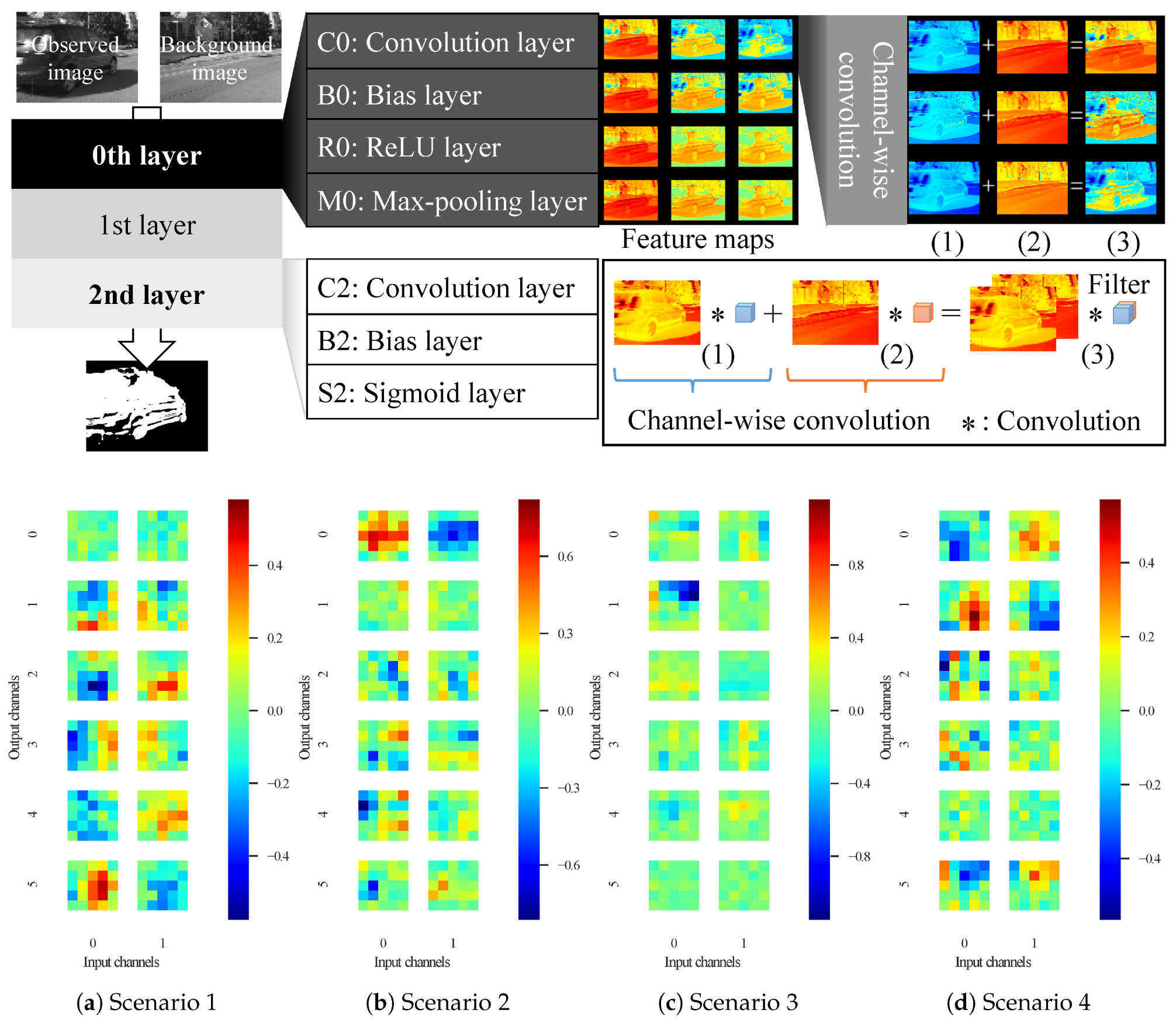
We study how deep neural networks learn to distinguish moving foreground objects from dynamic backgrounds in background subtraction. By visualizing and analyzing learned filters and intermediate feature maps, we investigate how the network extracts differences between observed and background images, suppresses background variations such as shadows, and enhances foreground objects. The goal is to better understand the internal mechanisms of deep learning-based background subtraction and inform the design of more robust models.

Deep Learning-Based Plant Growth Prediction

Deep Learning-Based Plant Growth Prediction

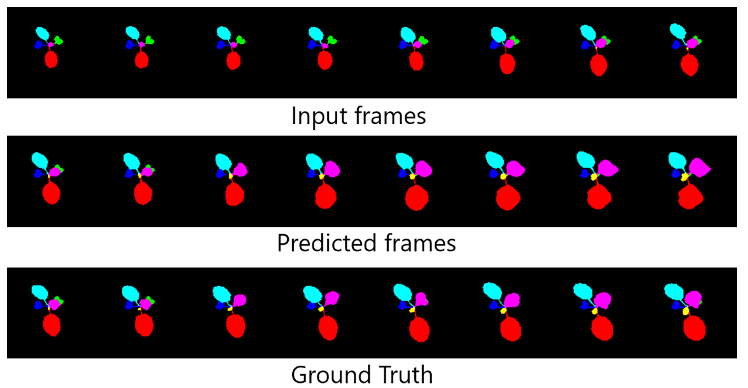
We study deep learning methods for predicting future plant growth from temporal image sequences. Using growth images of Komatsuna plants, the model generates future plant appearances from multiple past observations. The goal is to estimate future growth at an early stage and support applications such as early identification of plants that may not develop successfully.

Robust Change Detection with Light-Field Sensing

Robust Change Detection with Light-Field Sensing

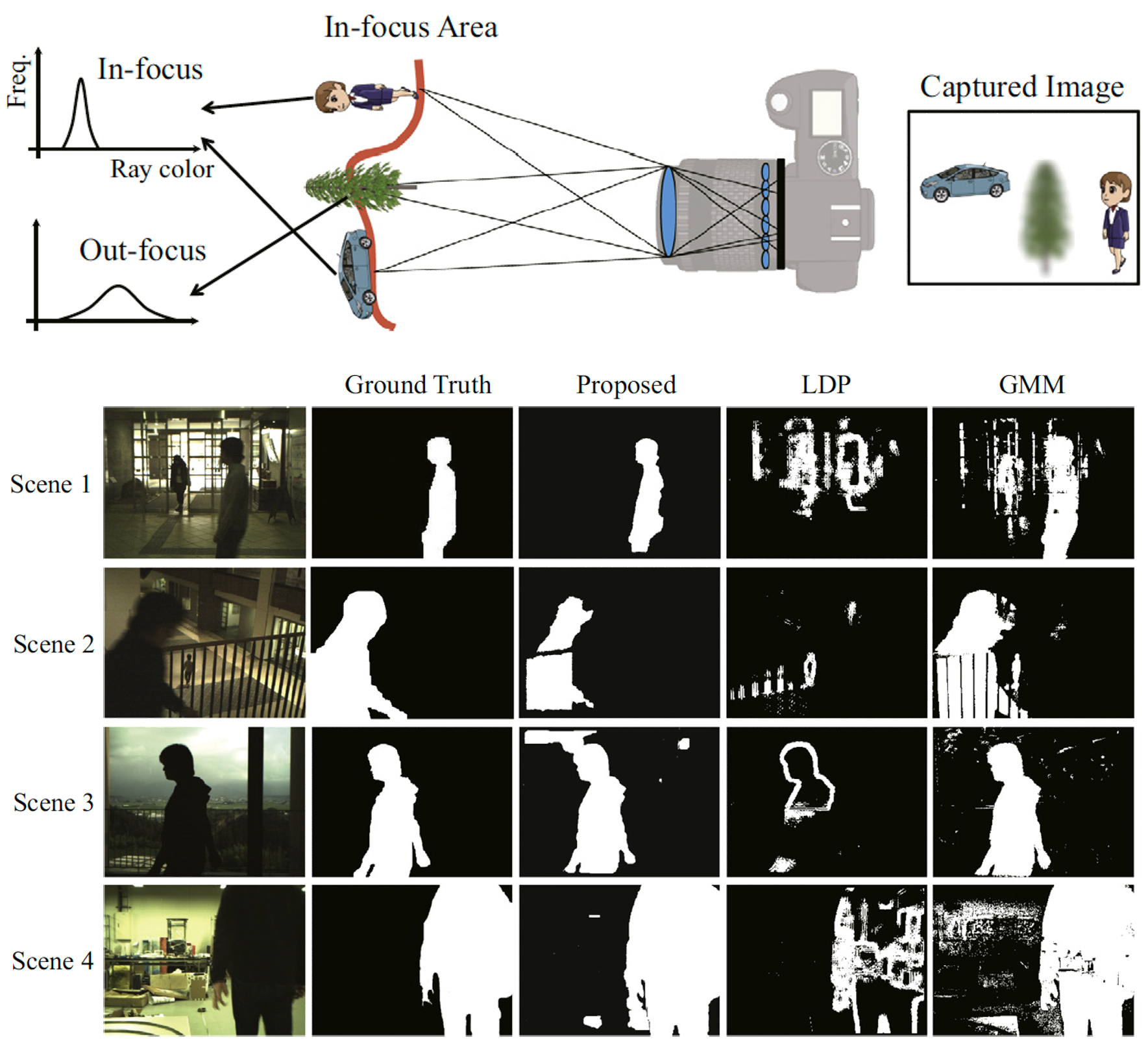
We study robust change detection for visual surveillance that suppresses false positives caused by background variations such as moving trees, automatic doors, and illumination changes. Using light-field sensing, the method configures arbitrary in-focus areas and combines spatial light-ray consistency represented by Local Ray Patterns with temporal background modeling. This enables accurate detection of changes within the target space while filtering out irrelevant background regions.

Transparent Object Segmentation from Light-Field Images

Transparent Object Segmentation from Light-Field Images

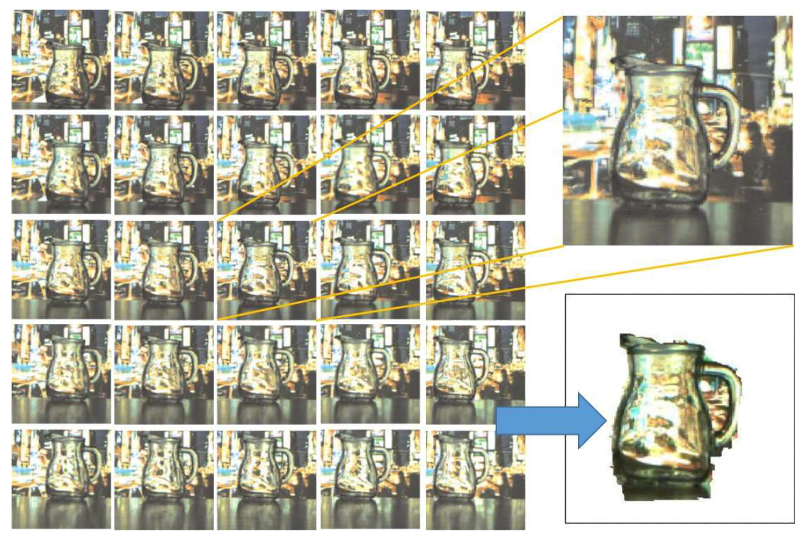
We study methods for segmenting transparent objects, which are difficult to detect in conventional images because they inherit colors and textures from their surroundings. By exploiting multi-view information in light-field images, the approach combines light-field linearity and occlusion cues to estimate transparent-object regions independently of background appearance, and applies graph-cut optimization for automatic segmentation. The goal is to enable robust recognition of challenging transparent objects such as glassware and containers.